
EVERYDAY SPEAKING AND WRITING
PTE Core Read Aloud: Everyday Meaning, Phrasing and Fluency
For PTE Core Read Aloud, focus on everyday meaning, phrasing and fluency. Follow the current official task direction, save evidence from the first attempt and use the result to choose one specific next action.
Official-source guided · Fact-checked 1 Aug 2026 · MKS Education • Putalisadak

PTE PREPARATION · MKS EDUCATION · KATHMANDU
Quick answer: For PTE Core Read Aloud, focus on everyday meaning, phrasing and fluency. Follow the current official task direction, save evidence from the first attempt and use the result to choose one specific next action.
Accuracy boundary: Pearson controls PTE content, format, scoring, booking and official results. Universities, visa authorities and IRCC programmes control acceptance and required scores. Recheck the current official source before booking, migration or application decisions.
Swipe horizontally to compare every column.
Know the measured skill
What does PTE Core Read Aloud require?
Everyday Meaning, Phrasing and Fluency should be converted into an observable decision that can be checked against current Pearson or receiving-authority guidance.
| PTE area | PTE Core Speaking & Writing |
|---|---|
| Purpose | Communicate clearly in practical workplace, community and everyday situations through spoken responses, a short written summary and an email. |
| Current format | Speaking & Writing lasts approximately 50–65 minutes and has seven types: Read Aloud, Repeat Sentence, Describe Image, Respond to a Situation, Answer Short Question, Summarize Written Text and Write Email. |
| Content context | Audience, purpose, tone, intelligibility, fluency, practical details, main-point selection, email conventions, organisation, grammar and spelling. |
| Reported evidence | Summarize Written Text requires 25–50 words. The Write Email task direction asks for 80–120 words in 9 minutes; always follow the instructions displayed in the current test. |
Answer the real question
Which decisions make PTE Core Read Aloud accurate?
Start with the exact task or receiving-authority decision. These three checks keep preparation connected to observable evidence.
Decision 1
Identify
Define what PTE Core Read Aloud must prove before choosing a technique.
Decision 2
Prove
Use everyday meaning, phrasing and fluency as an evidence checklist rather than a memorised script.
Decision 3
Check
Record the source, date, response and correction so the next decision remains auditable.
Worked situation: A learner practising PTE Core Read Aloud first labels the exact task, applies everyday meaning, phrasing and fluency, and then explains why the corrected response fits the official direction better than the original attempt.
Repeatable method
How should you practise PTE Core Read Aloud?
Classify the task, show the evidence and retest the method. Remembering one response is not evidence of a transferable PTE skill.
Step 1
Identify the everyday audience purpose and task form
Apply this step directly to PTE Core Read Aloud. Separate the measured language behaviour from a memorised shortcut and record what the response actually proves.
Evidence to save: An unedited response with task type, time and confidence recorded.
Step 2
Plan the main message and required details
Apply this step directly to PTE Core Read Aloud. Separate the measured language behaviour from a memorised shortcut and record what the response actually proves.
Evidence to save: A current official rule or direction linked to the decision.
Step 3
Respond clearly within the task time and word direction
Apply this step directly to PTE Core Read Aloud. Separate the measured language behaviour from a memorised shortcut and record what the response actually proves.
Evidence to save: A correction that explains why the tempting alternative fails.
Step 4
Review relevance tone fluency grammar and spelling separately
Apply this step directly to PTE Core Read Aloud. Separate the measured language behaviour from a memorised shortcut and record what the response actually proves.
Evidence to save: A fresh response showing independent transfer under realistic conditions.
Build transfer
How does one correction become a reliable PTE method?
A useful review preserves the original attempt, identifies the behavioural cause and tests the correction under new wording and realistic time.
Record the task type, original response, time, confidence and any note-taking or response-format choice. Then classify the issue as task recognition, language knowledge, evidence selection, fluency, execution, pacing or interface workflow. A label such as “careless” is too vague unless it names the behaviour that created the loss.
Write the smallest rule that changes that behaviour. For PTE Core Read Aloud, connect the rule to this focus: Everyday Meaning, Phrasing and Fluency should be converted into an observable decision that can be checked against current Pearson or receiving-authority guidance. Verify changing format, word-limit, scoring, booking or immigration facts against the linked official source. Reproduce the rule without copying a model response and explain why the close alternative fails.
Finally mix the skill with neighbouring PTE Core tasks. Repeating identical prompts can create familiarity without recognition. Use a fresh set, realistic timing and the correct response mode. The learner should identify the task independently, produce the evidence and complete a final form check before difficulty rises.
Common mistakes and precise corrections
- Using an academic essay style for an everyday task: Use practical direct language that completes the named task.
- Ignoring the reader or relationship: Match formality and tone to the audience and purpose.
- Using a memorised template that misses required details: Build from the prompt details rather than forcing stock sentences.
- Changing spelling conventions within one response: Choose one accepted English spelling convention and keep it consistent.
Evidence to keep in a PTE error log
- The exact test, question type, task direction and official source.
- The original response, time, confidence and method used.
- The phrase, relationship, grammar rule, audio cue or decision that proves the correction.
- The reason a tempting alternative or weaker response fails.
- A dated fresh attempt showing whether the correction transferred.
Swipe horizontally to compare every column.
Seven-day application
What is a measurable one-week PTE practice plan?
Keep each session small enough to review. Raise difficulty only when the method remains accurate on fresh official-format material.
| Stage | Action | Saved evidence |
|---|---|---|
| Day 1: diagnose | Complete a current PTE Core-format set involving PTE Core Read Aloud under labelled learning or timing conditions. | Accuracy, time, confidence and raw response |
| Day 2: classify | Label every meaningful error by task, language feature and behavioural cause. | One line of proof for every correction |
| Days 3–4: repair | Study one rule and complete targeted untimed-to-timed practice. | Two batches using the same method under new wording |
| Day 5: challenge | Add harder or noisier material only after the base method is stable. | Accuracy and timing compared with Day 1 |
| Day 6: mix | Combine the target with neighbouring PTE tasks. | Independent task recognition without a label |
| Day 7: decide | Retest and select the next maintain, deepen or change action. | A dated priority linked to new evidence |
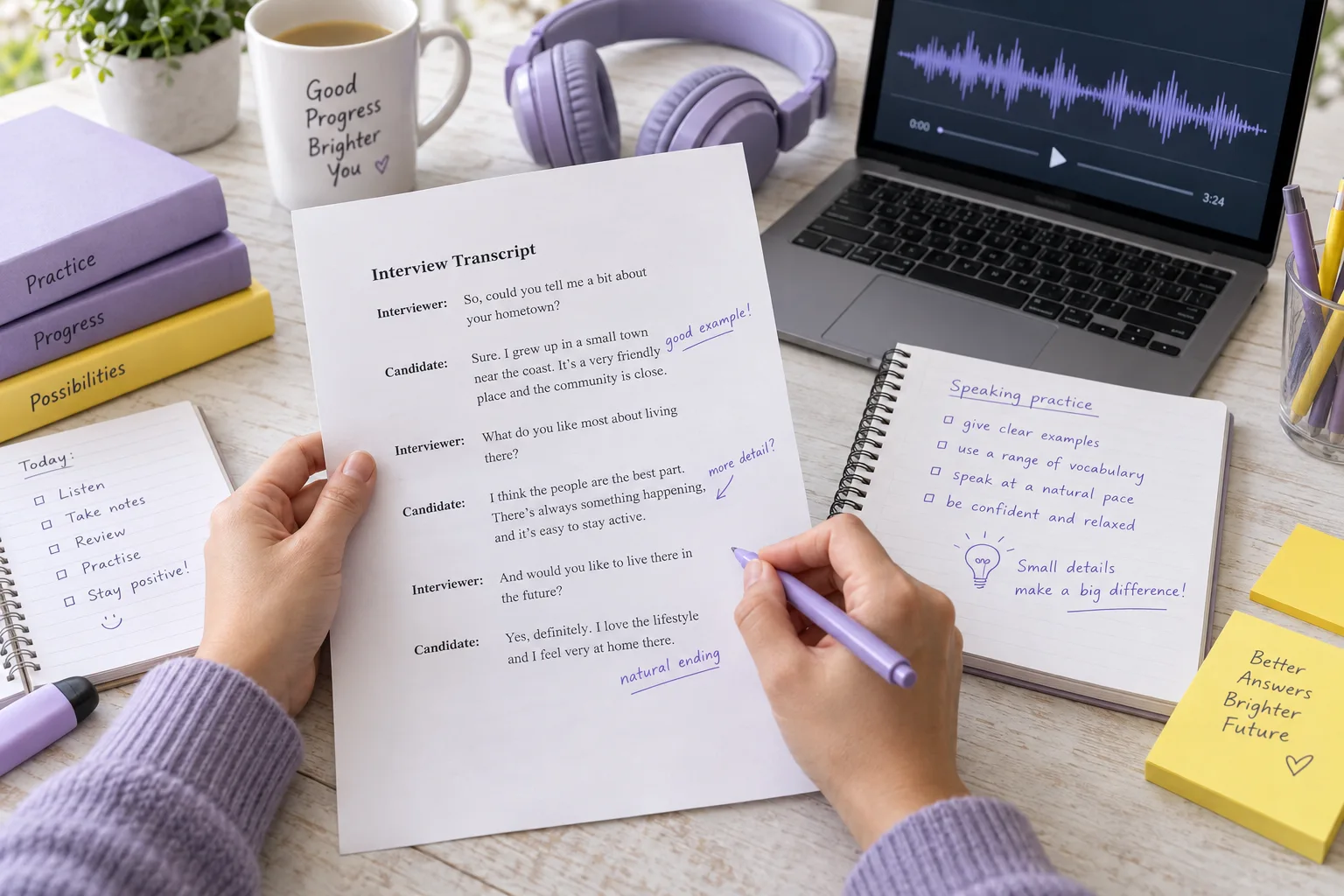
Official-resource workflow
Where should official Pearson practice fit?
Use each resource for its intended role instead of counting completed questions as improvement.
Current test-format pages
Use Pearson question-type pages to verify the task, prompt, time, skills, response direction, form and scoring notes before learning a strategy.
Smart Prep and official resources
Use Pearson Smart Prep, official guides, videos, courses or question banks to learn the interface and practise the current test rather than relying on remembered third-party claims.
Official Scored Practice
Use a fresh Scored Practice Test for baseline or retest evidence, follow the technical instructions, and convert the result into a task-level error log instead of a guarantee.
Relevant MKS support
How can MKS Education support this PTE skill?
MKS promotion describes learning support, not a Pearson, university, visa, invitation or permanent-residence promise.
Diagnostic teaching
Teachers can connect PTE Core Read Aloud to a four-skill error log and select the smallest weak language behaviour or decision to repair.
Connected study modes
Physical, online and hybrid classes can work with teacher feedback, recordings, physical books and computer-based practice.
Timed practice and review
Structured lessons and mocks can connect timing, task accuracy and response quality. Confirm current timetables, seats, fees and inclusions directly.
Bring your target test, receiving institution or Canadian programme, deadline and one unedited response. That allows the discussion to begin with evidence rather than a promised score.
MKS Education • Putalisadak
Build a PTE plan from a real diagnostic
Share whether you need PTE Academic or PTE Core, your target date and one recent official-format result. MKS can discuss a focused preparation plan while you retain control of registration and application decisions.
Official sources
Recheck PTE information
Continue learning
Related MKS PTE guides
- PTE Core Describe Image: Main Message and Practical Detail
- PTE Core Respond to a Situation: Audience, Purpose and Polite Action
- PTE Core Respond to a Situation Tone: Formality Without Memorized Scripts
- PTE Core Answer Short Question: Brief and Accurate Everyday Responses
- PTE preparation at MKS Education
- PTE requirements for Canada from Nepal
- PTE requirements for Australia from Nepal
- PTE requirements for UK universities
What is the quick answer about PTE Core Read Aloud?
For PTE Core Read Aloud, focus on everyday meaning, phrasing and fluency. Follow the current official task direction, save evidence from the first attempt and use the result to choose one specific next action.
Which PTE area includes PTE Core Read Aloud?
PTE Core Read Aloud belongs inside PTE Core Speaking & Writing. Use the current official question direction, timing and scoring information rather than an old template.
How should a Nepali learner practise PTE Core Read Aloud?
Begin by identify the everyday audience purpose and task form, then plan the main message and required details. Preserve the first response, explain the correction and prove it on a fresh PTE-format task.
What mistake should I avoid with PTE Core Read Aloud?
Using an academic essay style for an everyday task is a common risk. Use the exact task direction, show the evidence and retest the smallest weak behaviour.
Can MKS Education guarantee a PTE score, admission, visa or Canadian immigration result?
No. MKS Education can support PTE learning, practice, feedback and planning, but Pearson controls the test and each institution or authority controls its own decision.